

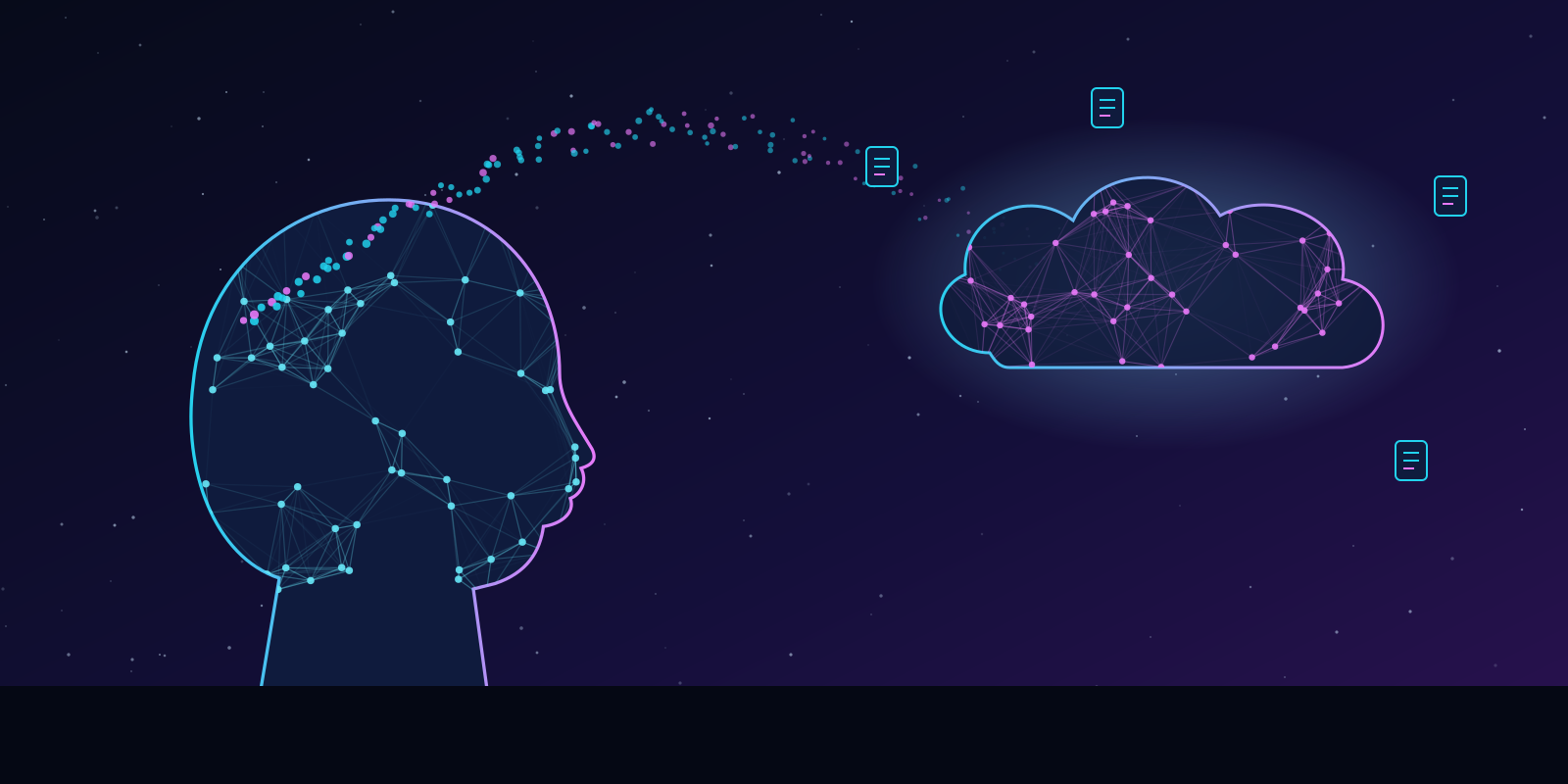
In March 2017 I wrote about the idea that we might one day transcend biology: shed our slow, fragile bodies and live on as “High Men” in the cloud. I leaned on Ray Kurzweil’s timeline, listed the upsides for humanity and the planet, and ended with a shrug. Plenty of skepticism, plenty of hurdles, but if it works, it takes us to the next level.
Nine years on, it’s time to check the homework. Some of what felt like science fiction in 2017 is now sitting in clinical trials. Other parts have barely moved. And a few questions I skipped over turn out to be the biggest ones.
The engine: AI moved faster than almost anyone expected
My 2017 argument rested on one premise: AI would grow exponentially, humans couldn’t keep up, so we’d have to merge with the machines. On the first half of that, the evidence has gone Kurzweil’s way, at least on pace.
Kurzweil still stands by his dates: human-level AI by 2029 and the Singularity by 2045. He repeated both in his 2024 book, The Singularity Is Nearer, and in recent interviews he has gone further, saying 2029 may now look conservative.
The Turing test, once the finish line for machine intelligence, has also been crossed in a fairly rigorous way. In a 2025 University of California San Diego study, people held five-minute chats with a human and an AI at the same time, then guessed which was which. GPT-4.5, when told to adopt a human persona, was picked as the human 73% of the time, more often than the real humans were. Without the persona it did far worse, and critics point out that a short chat is a weak version of the test. Kurzweil’s own 2029 bet uses a much stricter one.
The forecasters have shifted too. Surveys of AI researchers show expectations for human-level AI creeping earlier, though the range is still huge, and much of the disagreement comes down to how you define “AGI” in the first place.
Here is the catch for the High Men idea: a smarter machine is not a copied brain. AI got much better at being intelligent. It did not get any closer to being us.
The brain: the stubbornly slow part
Uploading a mind, properly called whole brain emulation, needs three things: recording what a brain does, mapping how it is wired, and building a model that runs like the original. The October 2025 State of Brain Emulation Report found real progress on all three since the field’s 2008 roadmap, while stressing how far there is to go. No method yet records more than 90% of an organism’s neurons at single-spike resolution.
The headline wins are all insects:
- 2024: the first complete map of an adult fruit fly brain, roughly 139,000 neurons and more than 50 million synapses.
- September 2026: a wiring diagram of a male fruit fly’s entire central nervous system, brain and nerve cord together, with about 166,700 neurons.
- March 2026: Eon Systems says it plugged a fly connectome into a simulated body and got it walking, feeding and grooming from the neural model alone. That is the company’s own description of what it calls the first embodied whole-brain emulation.
That is genuinely exciting. The Allen Institute noted in May 2026 that scientists could recreate the brain function of a small animal within several years, and that human emulation might happen in our lifetime.
Now the scale check. The best human sample mapped so far is about one cubic millimetre of cortex: roughly 57,000 cells and 150 million synapses. A whole human brain holds around 86 billion neurons and over 100 trillion synapses, a leap of about a million-fold. The 2025 report puts a full mouse connectome, about 500 times the neurons of a fly, at a decade or more away. Commentators summarising the report put human-scale emulation at least three to four decades out, and one widely cited forecasting community sits later still, with a median around 2068 for generic brain-emulation milestones.
Kurzweil’s 2045 is 19 years away. Even if AI hits his dates, the biology looks like it is running behind.
The bridge: brain-computer interfaces are real now
This is where the 2017 idea of merging with machines has most clearly become real, in a smaller and more medical form than the one I imagined.
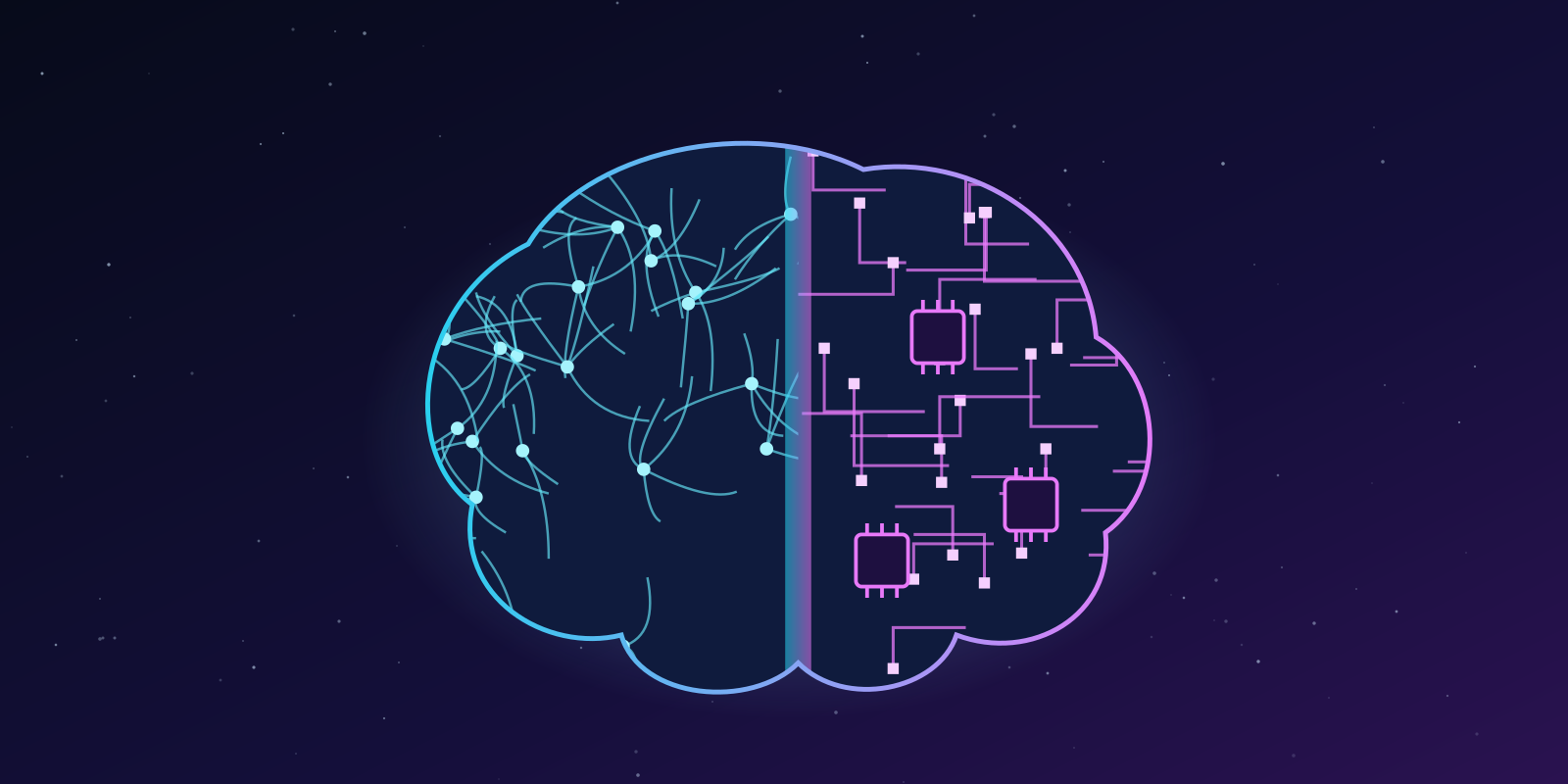
Neuralink began human trials in 2024, after the US regulator initially turned it down in 2022. By September 2025 it said twelve people with severe paralysis had its implant, and unofficial counts put the number at 21 by January 2026 and 26 by June. Patients have used the implant to move a cursor, browse the web, play games and post online using only their thoughts. Trials have expanded to Canada, the UK and the UAE, and Elon Musk has promised high-volume production and a largely automated surgery in 2026. That is a promise, not yet a result.
It isn’t a one-company story either. Synchron and Blackrock Neurotech have been working for years, and Blackrock’s Nathan Copeland has lived with an implant for about a decade.
But be clear about what these devices do. They listen to a tiny sample of a brain’s activity to restore movement and communication for people who have lost them. They are not copying a mind, and a recent explainer on the topic makes exactly that point. Kurzweil’s vision of connecting our neocortex to the cloud in the 2030s is still a long way past today’s hardware.
What I skipped in 2017
My original piece was all upside. Nine years later, three questions deserve more space.
Is it still you? If uploading means scanning a brain and running a copy, the original person may die while the copy carries on. Researchers at MIT’s McGovern Institute, writing in September 2026, flagged exactly this: the process could end up merely copying a consciousness while the original disappears. Neuroscience still has no accepted test for whether a simulation experiences anything at all. A convincing imitation and a continued life look identical from the outside.
Who gets to be a High Man? Coverage of mind uploading often frames it as a billionaires’ route to immortality, and it’s easy to see why. Mind Files running on shared infrastructure raise hard questions about who owns the servers, who can edit a mind, and who can switch it off. An uploaded mind would be far easier to edit than a biological one, which sounds like a cure for illness until you ask who holds the controls.
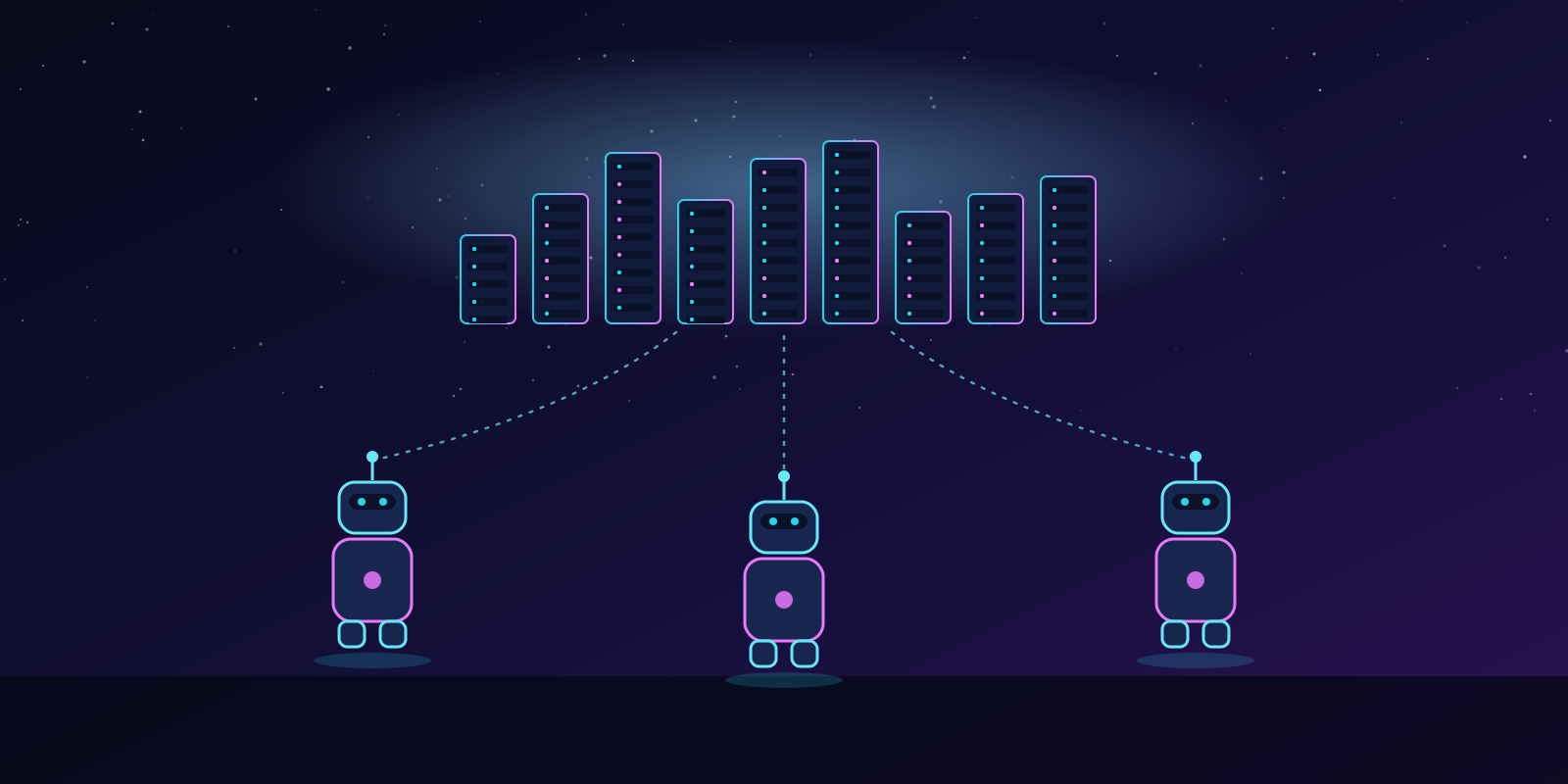
Would it really save the planet? I argued that digital minds would need fewer resources than biological bodies. Today the compute behind AI is a heavy consumer of energy and hardware, and the large-scale brain simulations researchers have run so far rely on big GPU clusters and simplified assumptions. Emulating billions of minds in rich detail could demand far more. That claim from 2017 now needs real numbers behind it.
The scorecard
| What I said in 2017 | Where it stands in October 2026 |
|---|---|
| AI will grow exponentially | Largely borne out, and expert timelines have shortened |
| Humans will merge with machines | Early days: implants for paralysis, dozens of patients |
| Minds in the cloud via whole brain emulation | Insect scale only; a mouse is a decade or more away |
| Telepresence robots and nanobot swarms | Not here; no sign of nanobots acting as bodies for uploaded minds |
| Easier to leave Earth | Untested |
So, will the High Men rise?
In 2017 I said that if mind uploading turns out to be possible, it could take humanity to the next level. I still think that. What has changed is how clearly we can see the size of the “if.”
AI did its part faster than expected. The biology is stubbornly slow, and the philosophy hasn’t been solved at all. The High Men probably won’t arrive on Kurzweil’s 2045 schedule. But the first step, someone with paralysis typing with their thoughts, is already happening, and it’s worth watching closely.
Check back in another nine years.


Leave a Reply
You must be logged in to post a comment.